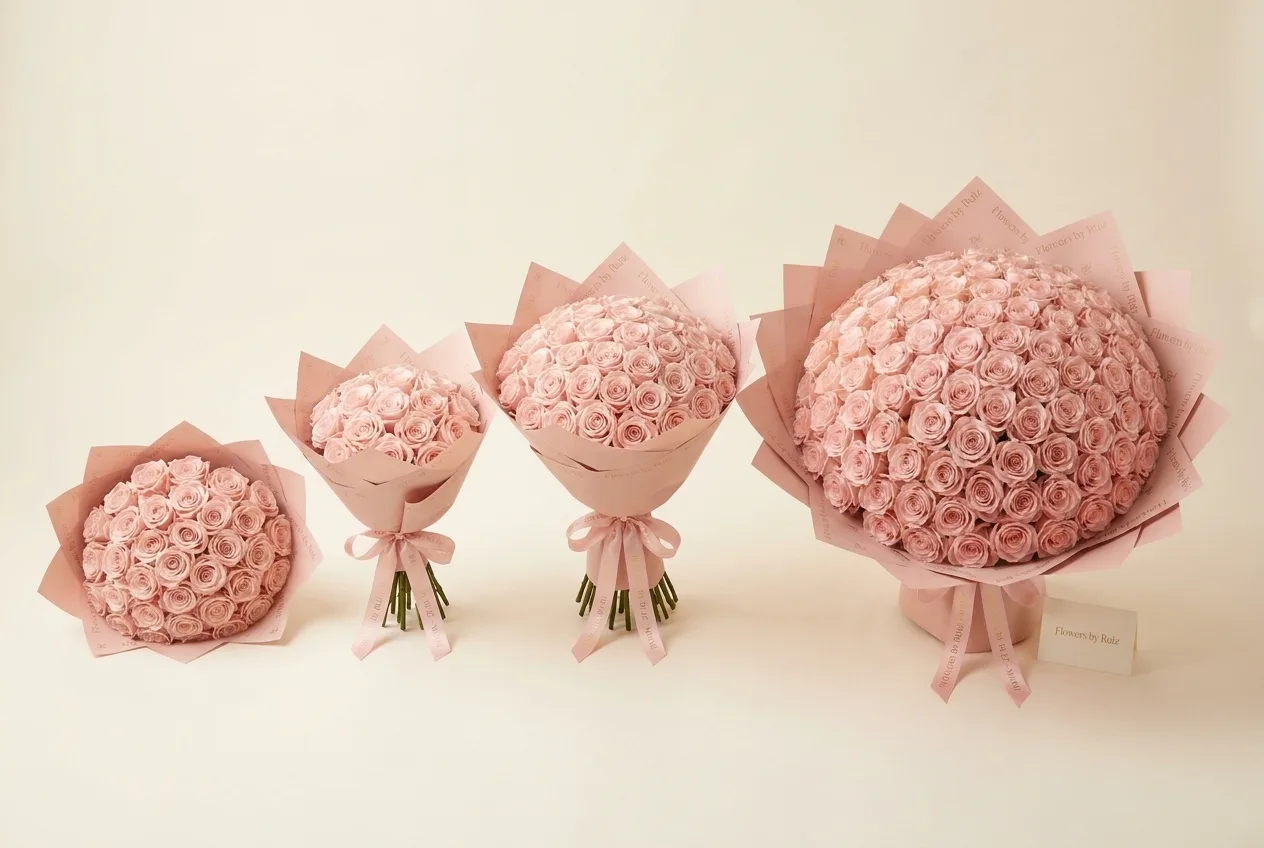
Stem count is a useful measure, but it is not the only measure of bouquet size. Flower head size, variety, opening stage, wrap and arrangement shape all change the final silhouette.
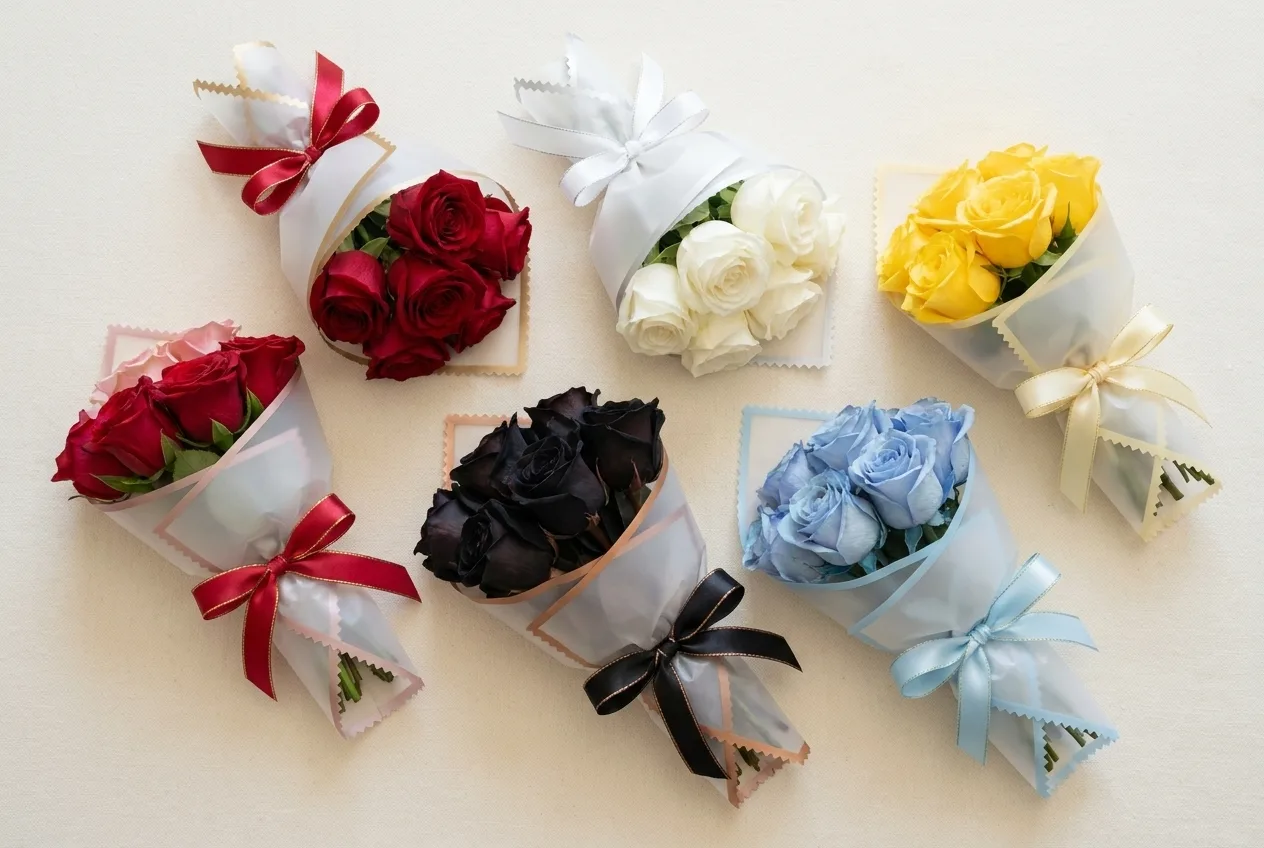
24–36 stems: personal and easy to place
This range suits everyday gestures, smaller celebrations and recipients with limited display space. It feels considered without dominating a desk, entry table or apartment.
A focused single-color palette can make a smaller stem count look especially polished.
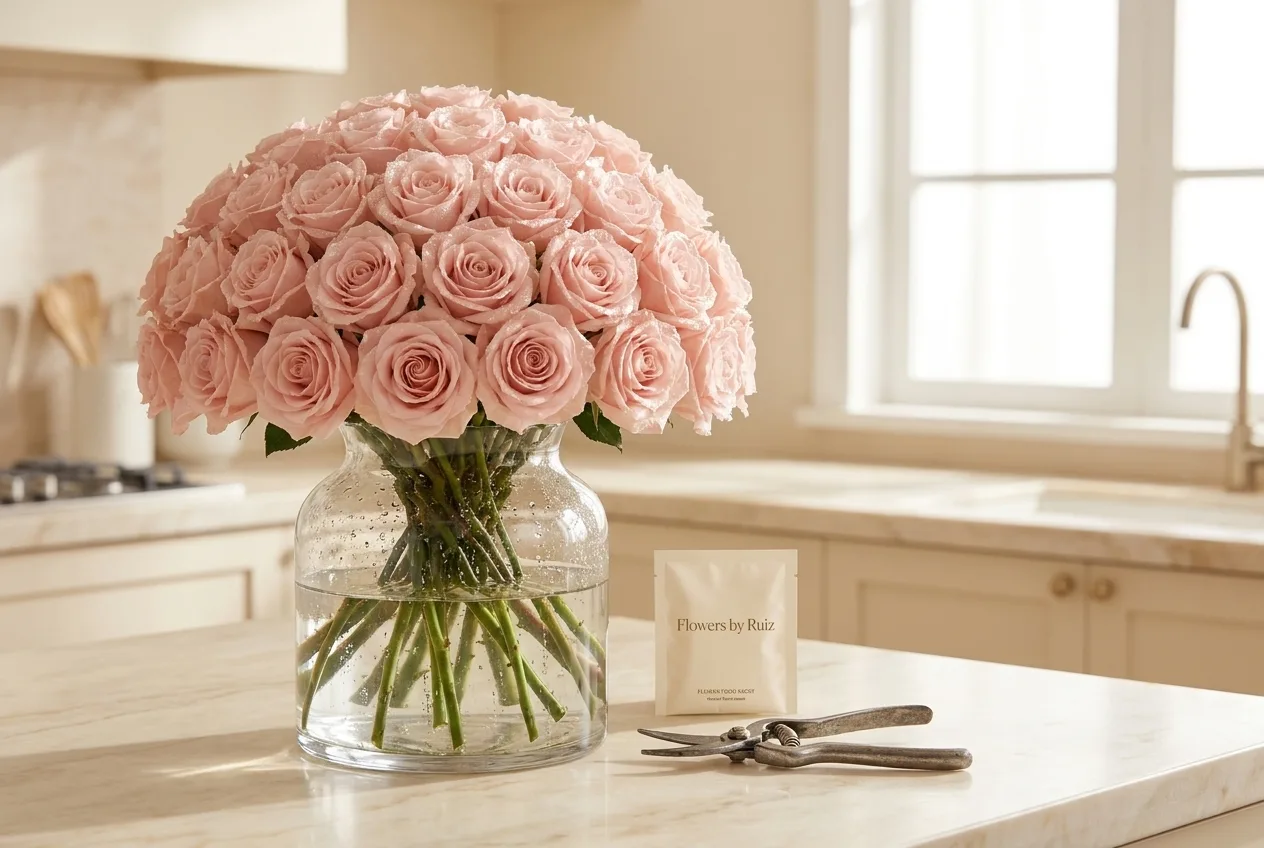
50–75 stems: generous presence
Fifty stems create the rounded, abundant scale many people picture for a luxury rose bouquet. Seventy-five adds more visual impact and room for contrasting colors.
This range works well for birthdays, anniversaries and important thank-you gifts where the arrival should feel substantial.
100–150 stems: a statement arrangement
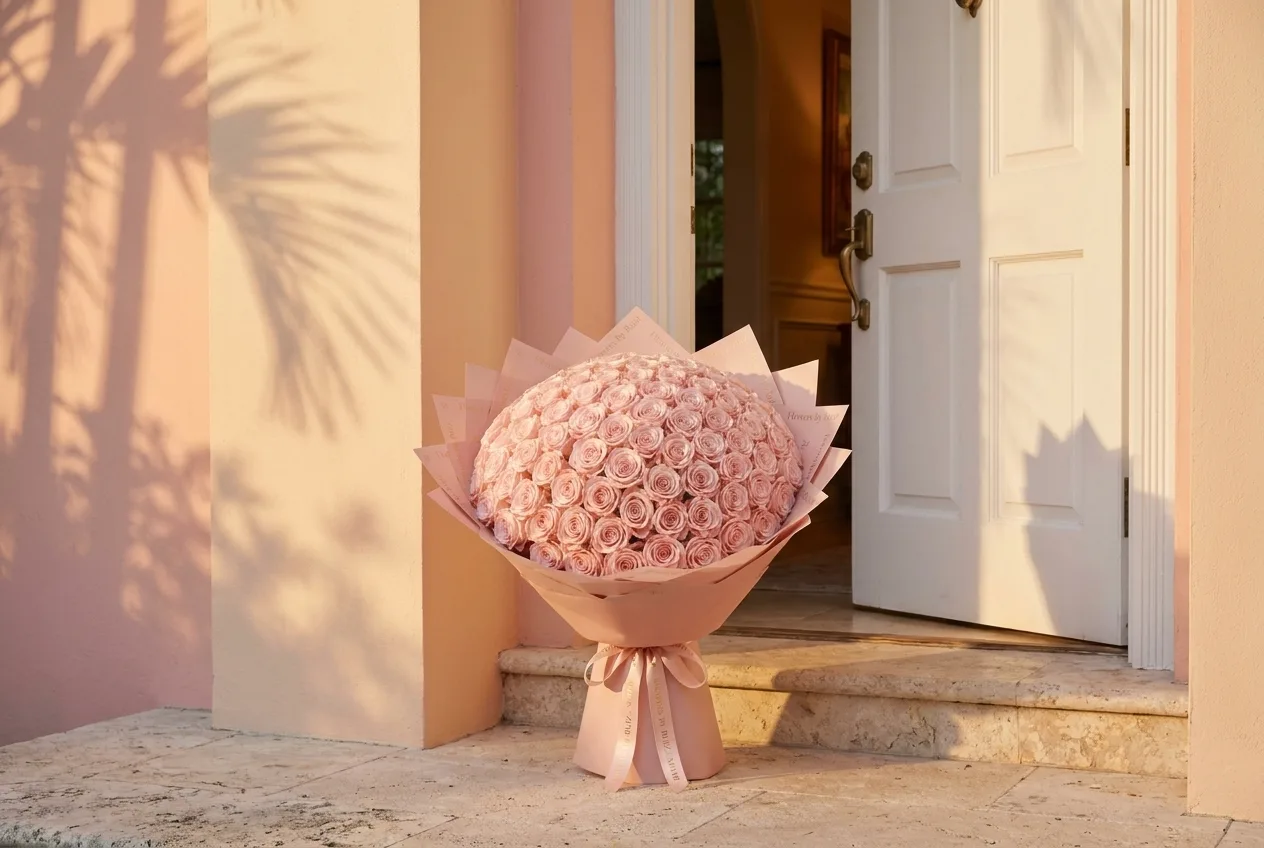
At 100 stems and above, the bouquet becomes a physical centerpiece as well as a gift. It needs adequate room for the handoff, display and care.
Large arrangements also take longer to assemble and secure. Provide detailed access instructions and avoid assuming that every reception desk can store one safely.
200 stems: maximum scale
Two hundred stems are intended for milestone gestures and dramatic visual impact. The size affects preparation, transport and where the recipient can place the arrangement.
Before choosing maximum scale, consider doors, elevators, vehicle access and the final room. A slightly smaller bouquet with the right palette may suit the moment better.
Choose the stem count for the recipient’s space and the moment—not only for the number on the product page.Design a bouquet